The Cost of Speaking Up
When You Tell the Truth in a Toxic Workplace, You Become the Problem
By Jason Arquillano
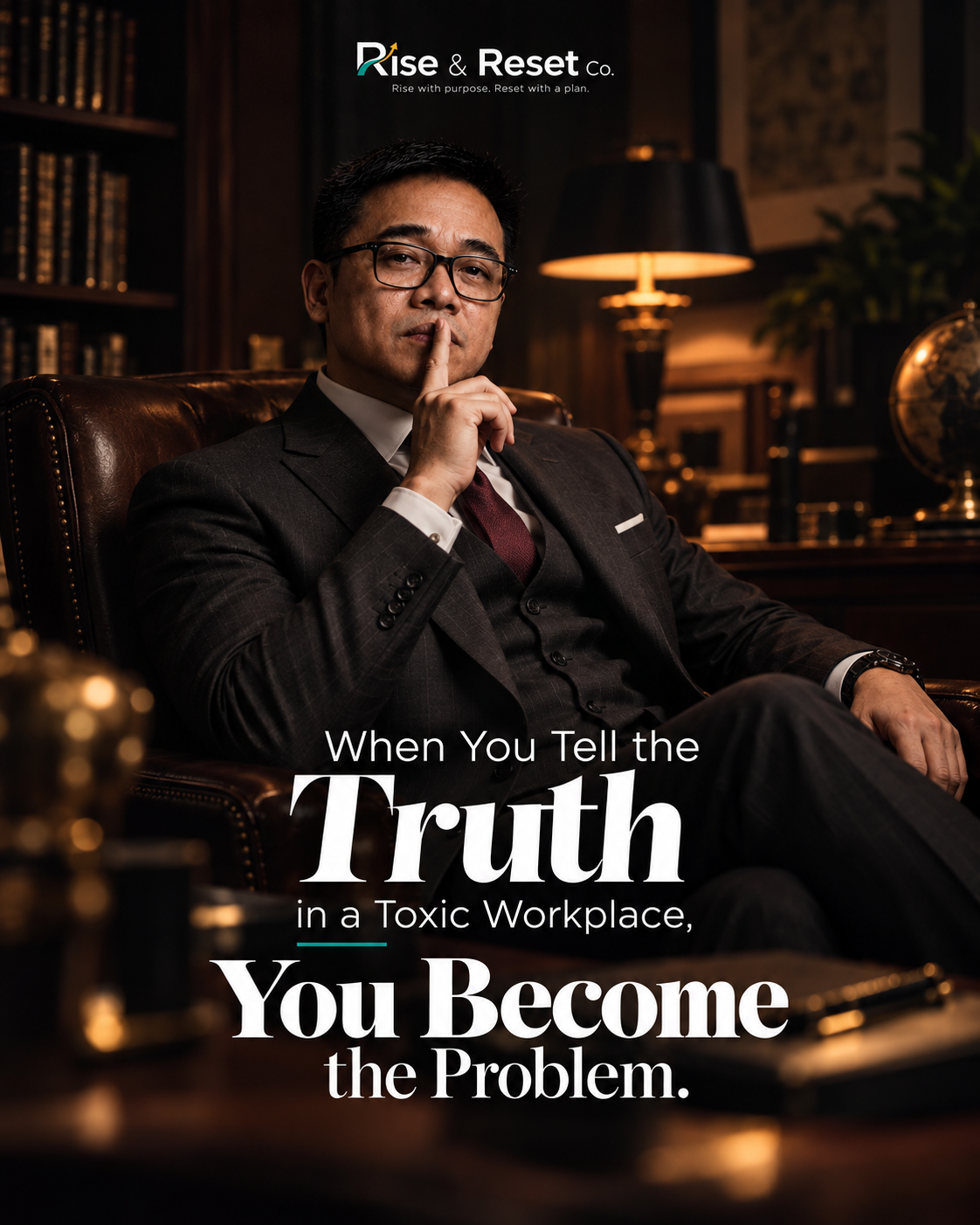
Have you ever noticed what happens the moment someone finally names the elephant in the room?
The room doesn't sigh with relief. It freezes.
Nobody says, "Thank you for saying that." Instead, eyes drop. The air gets heavy. And somehow, the person who spoke the truth suddenly feels like they did something wrong — when all they did was say what everyone was already thinking.
Welcome to the strange logic of a toxic workplace.
In a healthy culture, truth is welcomed. In a toxic one, it's punished.
This is the tell. It's how you know exactly what kind of environment you're really in.
In a healthy workplace, honesty is treated as a gift. Someone raises a hard truth, and leadership leans in: "Good — let's fix it." Problems get named so they can be solved.
In a toxic workplace, the truth isn't the problem. You become the problem for saying it.
Not the broken process. Not the bad behavior. Not the thing everyone quietly complains about in the corridor. You — the one honest enough to say it out loud.
Why the truth-teller gets blamed
It seems backwards, but there's a reason it happens.
A toxic culture doesn't survive on solving problems. It survives on hiding them. Everyone has quietly agreed to keep the peace, protect the image, and never rock the boat. The dysfunction feels safe because it's familiar.
So when you speak up, you don't just point at a problem — you break the unspoken agreement. You make people uncomfortable. And rather than face the hard truth, it's far easier for them to make you the issue.
"You're too negative." "You're not a team player." "You have a bad attitude."
Translation: You made us look at something we agreed not to see.
"Am I therefore become your enemy, because I tell you the truth?"
That question was asked thousands of years ago. It still gets asked in offices every single day.
What this does to good people
Here's the real damage. When honesty gets punished, good people learn to go quiet.
They stop raising concerns. They stop offering better ideas. They stop caring — because caring got them burned. And slowly, the culture fills up with silence, politics, and people just trying to survive until 5 o'clock.
The best talent doesn't stay in a place like that. They leave. And the ones who remain learn the unwritten rule: keep your head down, and never, ever name the elephant.
So what do you do?
If you're the truth-teller in a toxic room, hear this: you are not the problem.
But be wise about it. Here's what I've learned:
Pick your battles. Not every truth needs to be spoken in every room. Discernment isn't cowardice — it's wisdom.
Bring solutions, not just complaints. Truth lands better when it comes with a way forward. It's harder to dismiss.
Document and protect yourself. In a toxic culture, keep a record. Truth is safer when it's on paper.
Know when to stay and when to go. Some rooms can be changed. Some can only be survived. And some you simply need to walk out of — before they teach you to go silent too.
Never let them make you the villain
You were not put here to keep quiet so a broken system can stay comfortable.
Speaking the truth with courage and respect isn't a character flaw. It's integrity. And if an environment punishes you for it, that says everything about the environment — and nothing about you.
A place that treats honesty as a threat isn't asking you to be quieter. It's showing you it's time to protect your peace — and maybe your exit.
If you've ever been made the villain for telling the truth at work, share this with someone who needs to hear that they were never the problem.
— Rise & Reset Co.